Category: Economics Headline

  • 25 farmers honoured at Atwima Nwabiagya South

    25 farmers honoured at Atwima Nwabiagya South

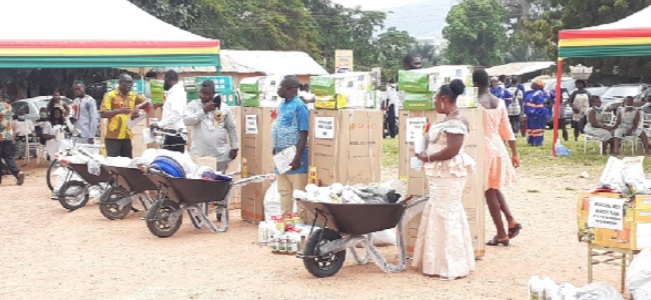
    Twenty-five farmers in the Atwima Nwabiagya South Municipality were on Friday honoured at this year’s Farmers’ Day celebrations at Mim in the Ashanti Region.

    They received knapsack sprayers, cutlasses, wellington boots, wax prints, motorcycles and certificates.

    Mr Stephen Takyi from Nerebehi was adjudged the Overall Best Municipal Farmer.

    He has 12 acres of cocoa farm, 300 ducks, 300 poultry birds and other food crops.

    He took home a tricycle and a certificate.

    Mr Alex Abugri, who has 17 acres of cocoa farm, was adjudged the Best Cocoa Farmer.

    He received a motorbike, five pieces of wax print, knapsack sprayer, a pair of Wellington boots, cutlasses and a certificate.

    Mr Michael Amoah Awuku, the Municipal Chief Executive, praised farmers in the Municipality for the hard work and dedication, which had ensured continuous food supply in the area.

    He said as part of efforts to support the planting for exports and rural development, the Assembly had distributed 42,000 oil-palm seedlings and 3000 coconut seedlings to farmers.

    Mr Daniel Peprah, the Municipal Director of Food and Agriculture, said the planting for food and jobs and other related policies had helped to increase food production in the area.

    He stressed the need for Ghanaians to eat local foods to encourage farmers to produce more to enhance national food security.

    GNA

  • Ministry of Finance welcomes Special Prosecutor’s risk assessment of Agyapa.

    Ministry of Finance welcomes Special Prosecutor’s risk assessment of Agyapa.

    The Ministry of Finance says it welcomes the decision of the Special Prosecutor to undertake the risk assessment and views it as an opportunity to address some of the concerns raised in respect of this transaction.

    In a statement issued by the Public Relations Unit, the Ministry said such an assessment would reassure Ghanaians that “the transaction has and will continue to adhere to the highest levels of corporate governance and transparency.”

    The statement said the Ministry had notified the Office of the Special Prosecutor (OSP) that the Initial Public Offering would not be launched until the completion of the risk assessment.

    It said the exercise and the findings by the Office of the Special Prosecutor of Ghana “shall be deemed material to the Initial Public Offering (IPO) and public listing of Agyapa and will therefore need to be fully disclosed in the prospectus prior to applying to the regulators of the UK and Ghana Stock Exchanges for approval to launch the IPO.”

    “This Ministry is, therefore, working with the OSP to successfully complete this exercise. In the interim, the OSP has been notified by Ministry of finance that the IPO shall not be launched until the risk assessment has been completed,” it said.

    On September 14, 2020, the Office of the Special Prosecutor (OSP), in exercise of its mandate pursuant to sections 2 (1) (c), 29, 69 and 73 of Act 959 and Regulation 31 (1) and (2) of L.I. 2374 requested for information and production of documents in relation to a risk assessment it was conducting on Agyapa Royalties transaction.

    Source: GNA

  • Narteh-Yoe replaces Wilfred Kwaku Osei

    Narteh-Yoe replaces Wilfred Kwaku Osei

    The Ghana Football Association (GFA) has appointed Mr. Samson Narteh-yoe, a Financial Economist onto the Ad-Hoc Compensation Committee of the Association.

    Mr. Narteh-Yoe a lecturer in Finance and Bussines Policy and Strategy would replace Mr. Kwaku Osei, President of Tema Youth Sporting Club, who declined his appointment to serve on the committee for personal reasons.

    Mr. Narteh-yoe is coming on board with over 20 years of work experience in various industries including Telecoms, Banking, Petroleum, FMCG, Manufacturing, and NGOs.

    He is a finance consultant and lectures Business Policy and Strategy, Investment and Portfolio Management, International Trade Finance, and Project Financing at the University of Professional Studies (UPSA), Accra.

    Mr. Narteh-yoe is expected to bring his experience to bear when he joins Mr. Frederick Nana Kweku Moore, the Chief Executive Officer of Accra Hearts of Oak Sporting Club and Mr. Delali Eric Senaye, Chief Executive Officer of Inter Allies Football Club on the Committee.

    The mandate of the Committee, as provided under Article 42(2) of the GFA Statutes 2019, is to propose to the GFA Congress the remuneration of members of the Executive Council.

    The Committee is expected to submit its work in time to form part of the Congress documents that will be sent to members of Congress as the formal convocation of Congress under Article 31(3) of the GFA Statutes 2019.

    Ghana News Agency

  • Ghana needs a new national capital – Economist

    Ghana needs a new national capital – Economist

    Habibu Adam, Senior Economist, Office of the Senior Minister on Friday called for a new national capital around the Tamale Airport down through Savannah to Bono East Regions.

    He said Accra was currently chocked with serious traffic and sanitation issues; “If care is not taken, in the next 10 years, Accra will need an interchange per kilometer to allow for free movement of vehicles. There will be too much human and motor traffic to an extent that the economic costs to the country would be dire.

    “Already Accra has captured Kasoa from Central Region and tension is beginning to brew between Greater Accra and Eastern Region,” Mr Adam told the Ghana News Agency in an interview in Accra.

    The Senior Economist explained that the Tamale International Airport (TIA) should be made the main international airport for Ghana for very strategic reasons.

    He argued that Tamale was the closest to the rest of the World and cut the journey by one-hour when flights take off from there. “Citizens from neighbouring countries like Burkina Faso, Niger and Mali would find it convenient to pick flights to Ghana and do the rest of the journey by road”.

    Mr Adam noted that the government could acquire large acres of land five times the size of Heathrow or Dubai airport at no cost or less cost to government and make it an Aviation Hub of West Africa.

    “Government through the private sector can set up the Maintenance, Repairs and Overhaul (MRO) of airplanes as well as the cargo village especially for perishable goods which could reach Europe and the rest of the World faster than when they take off from Kotoka International Airport in Accra,” he explained.

    The African Continental Free Trade Centre headquartered in Accra in addition to the Marine Derive project when completed could add close to one million people to the population of Accra in addition to the almost six million people on the overstretched land of Greater Accra,” he said.

    Mr Adam noted that: “It is therefore high time we start working towards correcting that monumental mistake. Many countries including; Kazakhstan, Burma, Bolivia, Portugal, Indonesia and on the African continent, we have Nigeria, Burundi, Cote d’ Ivoire and Tanzania have either moved their capital or are in the process of moving their capital”.

    He suggested that to cure the problem, each region should be given part of the national agenda to lead. “We can have tourism hub, educational hub, automobile hub, financial hub, petroleum hub among others to be led by the various regions”.

    He stressed that making the Tamale International Airport the Hub would provide economic justification for all other airports in the country the government currently wants to build.

    “With passengers arriving at the Tamale International Airport, they will be compelled to take flights to the various regions Accra, Kumasi, Ho, Cape Coast, Takoradi and Sunyani. This will boost the domestic aviation industry.”

    He said, “these actions should be deliberate policy of government to decongest Accra and move the services sectors to the less endowed regions.”

    Mr Adam suggested that the $10 billion Big Push proposed by the National Democratic Congress (NDC) and the GHS100 billion proposed by New Patriotic Party (NPP) to restart the economy should be channelled through building this new capital.

    He noted that one of the tragedies of our national development has been the failure of successive governments to carve our development path based on the potential of the various regions.

    “Over the years, our major developments have been concentrated in Accra and Kumasi resulting in mass exodus of people from the various regions to Accra and Kumasi bringing in its wake serious economic and social consequences.

    “What policymakers should have done was to look at the economic potential of the various regions and direct developments along the same path. Highly potentially industrialised regions should have been developed along the same path,” he said.

    GNA

  • Spillage of Bagre Dam: Govt to provide GH¢29.6m for long-term solution

    Spillage of Bagre Dam: Govt to provide GH¢29.6m for long-term solution

    Government has planned to carry out an urgent exercise at an estimated cost of GH¢29.6 million, aimed at providing long-term solution to the perennial flooding and its related destructions caused by the spillage of the Bagre Dam, the Water Resources Commission has hinted.

    In a statement by the Commission issued to Ghanaian Times on Sunday, the Executive Secretary, Ben Ampomah said, “government wishes to assure the public that, it is committed and is working on short and long term measures to mitigate the impacts of the perennial floods in the White Volta Basin.”

    The exercise, according to the Commission, would include the dredging of the White Volta in the upstream areas of Yarugu (Bawku), Pwalugu, and the confluence of the Sissili and Kulpawn tributaries, which would cover an expected area of about 30km.

    In addition, 42 communities comprised of 25 in Bawku West, five in Nabdam and 12 in Talensi, all in the Upper East Region, would be engaged to ensure that the causes of the floods and the attendant damages are reduced, Mr Ampomah said.

    He explained that there would be documentary production for awareness creation on restoration and stabilisation of dredged river banks, and emergency response.

    Mr Ampomah indicated that the exercise would be done to compliment the ongoing non-structural measures, notably, the provision of forecast and early warning information.

    Other measures, in this regard, include the exchange of data and information on the spills, consultations with managers of the Bagre Dam, community education, awareness creation, and emergency response.

    He explained that the exercise would minimise the impacts of flooding in the upstream of the main White Volta within the Yarugu, Pwalugu, and the confluence of the tributaries.

    Additionally, the dredging, he noted, would improve flows into the Pwalugu Dam, and facilitate flow from the Sissili and Kulpawn tributaries, and, also minimise sedimentation of the Pwalugu reservoir.

    According to Mr Ampomah, the results of an initial interventions carried out in 2019, has proved that dredging of the White Volta river, when done periodically as a maintenance activity would yield greater positive impact.

    “At the end of the rainy season in November 2019 there were no reports of extensive flooding of the dredged areas potentially prone to flooding in the past. The destruction of crops and farmlands also reduced significantly in the area,” he said.

    To date, several farmlands within the upstream sections of the White Volta, especially, the Bawku Municipal, Bawku West, Talensi and Nabdam districts have been flooded through the spillage of the Bagre Dam.

    This situation, the Commission acknowledges, should it prevail in September and November 2020, would affect lives, settlements and human health, while, the financial costs of relief and emergency responses would be colossal.

    Already, six people have died as a result of flood from the spillage of Bagre dam in the North East Region, a situation which was compounded with heavy rains in the area in the past few weeks, destroying several acres of farmlands, and left hundreds homeless.

    The spillage of the Bagre Dam has become an annual ritual, with the Water Resource Commission, , indicating that this year’s opening of spill gates and release of water from the dam has become the earliest, since 2007.

    ghanaweb
  • Cape Coast airport: Should we live in poverty because we’re poor? – Buaben Asamoa questions critics

    Cape Coast airport: Should we live in poverty because we’re poor? – Buaben Asamoa questions critics

    The Communications Director of the New Patriotic Party (NPP), Buaben Asamoa has justified that the Cape Coast airport is going to be an avenue to reduce poverty in the Central Region.

    According to him, Cape Coast is a hub for tourism and developing the city will help its inhabitants and their communities develop, hence their need for an airport.

    Vice President, Dr. Mahamudu Bawumia announced at the 2020 manifesto launch of the New Patriotic Party (NPP) that the party will build a harbour and airport for Cape Coast in the Central Region when re-elected into power.

    Speaking in an interview on the Epa Hoa Daben political show on Happy 98.9 FM hosted by Afrifa-Mensah, the politician said, “If we don’t open up our country for development, we will never grow. We must make Cape Coast a hub for tourist activities. Ghana is 63 years and would have been retired if she were a person. Should she live in a mud house during her retirement?” he asked.

    “Should we continue to live in poverty because we are poor? We need to develop Cape Coast because doing so will create jobs. And constructing an airport in the town will serve as an alternative to a lot of people.”

    The Member of Parliament (MP) for the Adentan Constituency furthered that it would even be best to have airports in all regional capitals. He argued, “Some people who arrive at Kotoka will wish to travel by plane to the other parts of the country by air and it is best to have an airport in all our regional capitals.”

    Buaben Asamoa added that if not for the COVID-19 pandemic, the country would have been flooded with tourists and with most of them trooping to Cape Coast, and Ghanaians would have realized the significance of an airport in the historic town.

    “Because the people are poor, shouldn’t we serve them with rich things? People will travel to Cape Coast and spend a lot more money there and citing an airport in the town is the best. The revenue from tourism alone will improve their lives,” he reiterated.

    Commenting on the call made by a section of Ghanaians for the NPP to drop plans to build the airport and rather focus on dualizing roads leading to Cape Coast, he noted that doing so will only make travelling to the tourist town more stressful and unappealing.

    “If we dualize the road, you’ll have to take a ‘trotro’ from Adenta to Kaneshie and that will take you about an hour. You will then have to sit in a Cape Coast vehicle for an hour until it is filled to capacity. After, it will take you an hour and 30 minutes to get to Cape Coast.”

    Further explaining the need for an airport in Cape Coast, Yaw Buaben Asamoa said, “It is about opening up the city for future investments. If we don’t construct the airport, we will be the cause of our own problems. We should open up the city for the people who believe in Ghana,” that is tourists.

    Etv Ghana- Dikoder.com

  • Govt to use Pozzolana, local bricks for infrastructure projects to cut $1bn/year imports

    Govt to use Pozzolana, local bricks for infrastructure projects to cut $1bn/year imports

    The Nana Addo Dankwa Akufo-Addo government has said it will prioritise the use of Pozzolana cement as part of efforts to use more local content in developing the country’s infrastructure.

    According to the governing New Patriotic Party’s newly-launched 2020 manifesto, such local materials would be used more in the government’s “significant investments in public infrastructure development” which covers roads, schools, hospitals, clinics, office buildings among others.

    The document said: “Most of our roads are constructed with asphalt overlay or with bitumen surface dressing (BSD), and most public buildings are constructed with cement and concrete materials”, adding: “90% of the raw materials for producing these two primary products are, however, imported, costing the country more than $1 billion annually”.

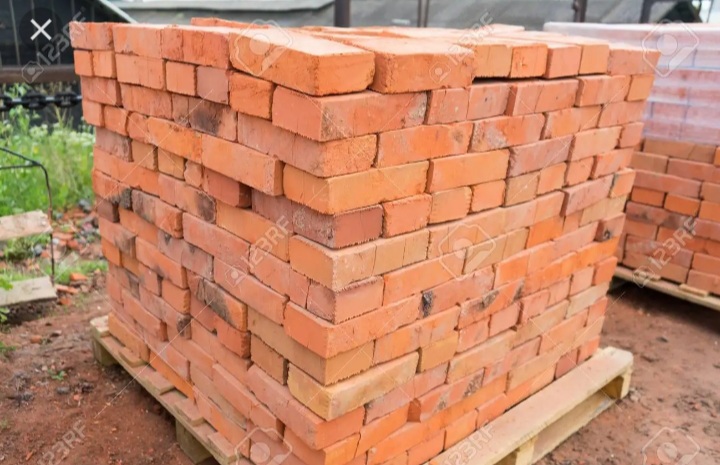
    On the other hand, the document noted, “we have demonstrated the availability and durability of local building materials, including burnt bricks and Pozzolana cement”.

    “Several brick factories can be found in the Ahafo, Ashanti, Bono and Central regions”.

    “We also have two Pozzolana cement factories in Ghana”.

    “Over the next four years, we will actively mainstream the use of these, and other local materials in public sector infrastructure projects”, it noted.

    Below is the party’s plan for infrastructure development for the next four years:

    Inadequate transport networks that connect cities, towns and rural areas, poor quality roads, and growing urban traffic congestion are critical areas requiring urgent action, as well as expansion in port and harbour infrastructure to enhance trade and promote investments.

    Over the next four years, we will:

    • use Public-Private Partnership to accelerate the development of road infrastructure through toll-financing

    • finalise our public transport policy for a network commensurate with the needs of a fast growing economy

    • launch the biggest-ever road maintenance infrastructure programme, as part of improvements in our existing road infrastructure and as a source of major job creation for the youth.

    This will be targeted at youth-owned enterprises

    • re-launch the metro mass transport system throughout regional capitals • introduce innovative policies to facilitate urban traffic decongestion • complete development of the Buipe Inland Port • complete development of Coastal Fish Landing Sites • complete development of the Boankra Inland Port • upgrade Tema Shipyard and Drydock • Volta Lake Transport Improvement • complete development of Atuabo Port • completion of the construction of the Western Line, and Tema to Mpakadan rail lines • commence construction of: • the Eastern Rail Line • the Aduadin to Obuasi Lines • the Ghana – Burkina Line • a new line between Sekondi and Shama Free Zone area • a new harbour in Cape Coast, and • a new airport in Cape Coast • prioritise feasibility studies in establishing a rail link through Kasoa to Accra with the view to establish a railway line service to reduce significantly travel time to and from that fast-growing part of Greater Accra and Central Regions. • Continue investing in the expansion of infrastructure at all public tertiary institutions to enhance capacity and facilities to absorb the expected increases in student population as graduating students from Free SHS pursue further education • Bridging the Development Gap between the North and the South We will continue to implement existing policies and ongoing projects to bridge the development gap between the northern and southern regions of Ghana e.g. IPEP, 1V1D, 1D1F, Pwalugu Dam, Critical Roads, Ghana—Burkina Rail Link among others, as well as revamp the cotton industry, establish rice mills in rice producing districts, revamp dams such as Vea, and Bontanga (Tono has been rehabilitated), develop the Buipe in-land port, district hospitals and regional hospitals in districts and region without, construction of the Daboya and Dikpe bridges, upgrade the Tamale Airport, pursue the Iron and Steel Industry project, and continue the exploration for oil in the Voltaian basin amongst others.

    Source: class fm

  • Ghana launches 2020 Chocolate Day

    Ghana launches 2020 Chocolate Day

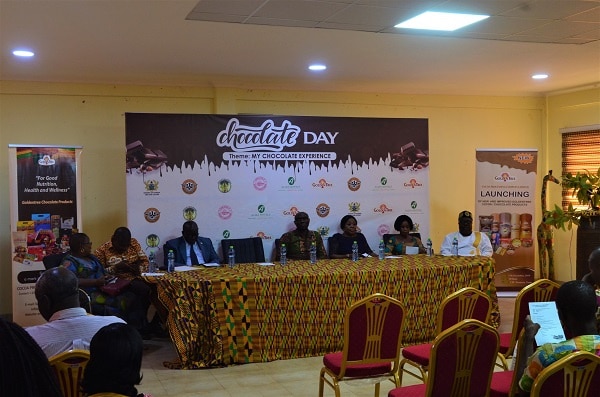
    Ghana on Tuesday launched the 2020 National Chocolate Day celebrations with a call for patronage and usage of “Made in Ghana Chocolate”.

    Mrs Barbara Oteng Gyasi, the Minister of Tourism and Creative Arts, who launched the programme, encouraged the use of chocolate as a ‘Gift of Love’ to all during the celebration.

    This year’s celebration will commence from February 10 and climaxed on February 14, on the theme; “My Chocolate Experience: My Holistic Well-Being”.

    Mrs Oteng Gyasi said the Ministry, in 2005, instituted the National Chocolate Day to coincide with Valentine‘s Day, February 14, to promote the consumption of Made-in-Ghana chocolate and cocoa based products.

    She said it was also to position cocoa and the chocolate experience as a strong element of the Ghana tourism experience, saying this had been largely successful with the Day being an important feature of the tourism calendar of events.

    She said this year’s celebration would begin with a Digital Campaign Competition where contestants would post a picture of themselves enjoying chocolate or any product produced with chocolate at a hospitality establishment on social media.

  • FORMER MP FOR NKWANTA SOUTH DONATES FERTILIZERS TO FARMERS IN HIS CONSTITUENCY

    FORMER MP FOR NKWANTA SOUTH DONATES FERTILIZERS TO FARMERS IN HIS CONSTITUENCY

    The former Mp for Nkwanta south constituency who doubled as the ex majority chief whip, Honourable Gershon Gbediame, identified some cocoa farming communities in the constituency during his days in the office as Mp and resourced them with cocoa seedlings and cutlasses to promote agricultural productivity in the area.

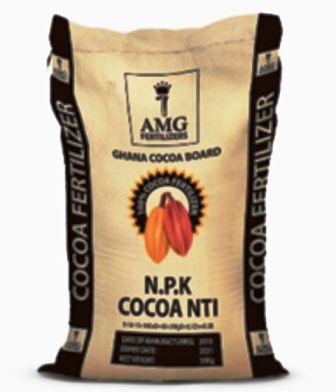
    The former Mp who has endless love and support for his constituents three days today went to some of these cocoa farming communities to donate free organic concept fertilizers to all the cocoa farmers there in order to augment productivity and also to alleviate poverty as well as sufferings of the people.

    These communities are Pusupu, Brewaniase, Bontibor, Abruburwa, Fankyeneko, salifu, Obanda and kpena.

    He is still having more of these cocoa farming communities in the constituency to donate more of the fertilizers, he’s hoping to cover the entire municipality by next week to ensure a fair and transparent donation of the fertilizers to all the farming communities in the municipality.

    Hon Gershon believes that, vegetable farming is one of the best investments in the agriculture sector, hence he’s poised to donate more of the fertilizers to people willing to go into vegetable farming, he is ready to promote vegetable farming to make Nkwanta south constituency the best suppliers of vegetables in the Oti region and Ghana at large.

    Addressing some farmers over 500 people at Brewaniase, he advised the youths to invest more in agric, most especially vegetables farming, he believes that will promote entrepreneurship and also provide economic freedom for them as young ones to be self dependent.

    The former Mp has vowed to support constituents of Nkwanta south constituency in his little way, despite the fact that he is no more in office, he still believes that, helping others does not require a political power to do that.

    The former majority chief whip want to use this opportunity to assure farmers in the Nkwanta south constituency that, he has more plans to support them, those who farms cassava and yam will soon get a support to also explore more in the production of those crops.

  • Ghana launches 2018 PEFA report

    Ghana launches 2018 PEFA report

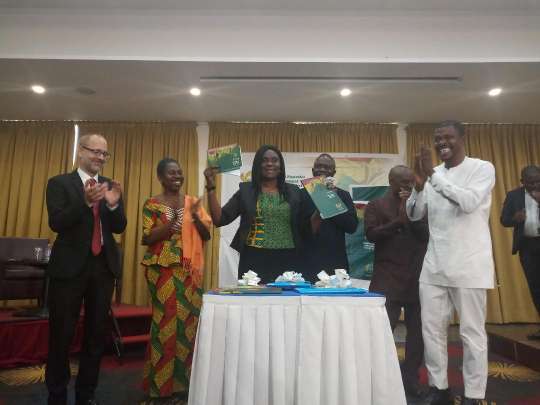
    Accra, Aug 10, GNA – Ghana over the weekend launched the 2018 edition of the Public Expenditure and Financial Accountability (PEFA) report in Accra.

    PEFA is a tool for assessing the status of Public Financial Management (PFM).

    The report, which is the fourth edition, establishes a baseline for PFM performance, using the revised Framework that came into effect in early 2016.

    This edition contains many changes from the 2011 Framework, and requires a new baseline.

    The report, which was produced by the Ministry of Finance, assesses the change in PFM performance since the 2012 PEFA assessment according to the 2016 PEFA Framework guidelines on tracking performance change.

    Speaking at the launch of the report, Dr Grace Bediako, the Director-General of the National Development Planning Commission (NDPC), said in the Ministry of Finance’s quest to contribute the President’s aim of ‘Ghana Beyond Aid’, priority was placed on achieving the targets set out in the PFM Reforms Strategy.

    “To this end, there are a number of ongoing PFM reform initiatives that the Ministry is undertaking including; the operationalisation of the PFM Act 2016 (Act 921) and its related Regulation; the deployment of an Integrated Financial Management Information System (GIFMIS) to all the 254 Metropolitan, Municipal and District Assemblies (MMDAs) and the development of Audit Management Information System (AMIS) to aid the work of the Auditor-General,” she stated.

    Others are; the deepening of the Treasury Single Account (TSA); the implementation of International Public Sector Accounting Standards (IPSAS) to enhance the reporting of our public finances, and the deepening of the implementation of Human Resource Management Information System (HRMIS) so as to enhance the management of our wage bill.”

    Dr Bediako noted that the PEFA Framework, used in the production of the 2018 report had become the ‘gold standard’ for identifying opportunities for PFM performance improvements.

    She said the framework had the potential of revealing the principal causes of PFM weaknesses that impacted directly upon the quest of the Government to achieve aggregated fiscal discipline, strategic allocation of resources and efficient delivery of public services to the generality of Ghanaians.

    She said the report provided a comprehensive review of the strength and weakness of Ghana’s PFM System with regards to seven thematic areas of the budget reliability: Transparency of public finances; management of assets and liabilities; policy-based fiscal strategy and budgeting; predictability and control in budget execution; accounting and reporting; as well as external scrutiny and audit.

    “As a country, we have a long way to go if we are to achieve the President’s aim of ‘Ghana Beyond Aid’,” Dr Bediako said.

    “I am confident, though, that a new ‘Can Do Spirit’ is now gathering and in due course will lead to our success. To this end, it is my expectation that the content of this report will contribute to the achievement of this laudable goal of the President.”

    Dr Mohammed Sani Abdulai, Project Director, Public Financial Management Reform Project (PFMRP), said the rational for this PEFA assessment was to review how well the PFM system of the Government were working and whether its current PFM reform strategy (PFMRS) needed adjustment.

    He said the findings of the 2018 PEFA would be used to directly inform the medium-term PFM plans of Development Partners.

    Dr Cecilia Fofieh-Ampadu, the Chairman of the Public Services Commission, who chaired the event and launched the report recommended that the report be used as a working document to achieve the targets set out in Ghana’s economic reform agenda.

    Mr Michael Ayensu, Coordinating Director, Ministry of Finance, said PEFA sought to improve on the management of Ghana’s public resources; adding that “and in particular from the year 2000, through such assessments we’ve been able to reform not only our financial management, laws and regulations, we’ve also reformed our procurement agreements, and also reformed our auditing arrangement and even our reporting”.

    Mr Matthias Feld, Deputy Head of Mission and Head of Cooperation, Embassy of Switzerland in Ghana, Togo and Benin, who lauded Ghana for the report launch, also noted that it marked a significant milestone for the out-going public financial reforms of Ghana.

    GNA

    By Iddi Yire, GNA